You will probably have seen green food hygiene rating stickers displayed in the windows of restaurants, cafés, takeaways and other food businesses. The rating reflects the food hygiene standards found at the time of the most recent inspection; it is not a rating of food quality or customer service.
Customers can check ratings displayed at a premises or search the Food Standards Agency ratings website. A rating can influence trust and where people choose to eat, so understanding the scheme matters commercially as well as legally.
Where does the scheme operate?
The Food Hygiene Rating Scheme operates in England, Wales and Northern Ireland. It is run by Local Authorities in partnership with the Food Standards Agency. Scotland uses the separate Food Hygiene Information Scheme.
What does an officer assess?
During an inspection, an authorised officer considers three broad areas:
- Hygienic food handling: how food is prepared, cooked, reheated, cooled and stored.
- The condition of the premises: cleanliness, layout, lighting, ventilation, pest control and other facilities.
- Management of food safety: the procedures, training, records and controls used to maintain good standards consistently.
The officer records what they find and considers their confidence that appropriate standards will be maintained. The inspection scores are then used to determine a food hygiene rating.
What the food hygiene ratings mean
Rating 5 — hygiene standards are very good
This is the highest rating. It indicates that the business was found to have very good food hygiene standards at the time of inspection.
Rating 4 — hygiene standards are good
The business has good standards, although the officer identified some areas where further improvement could be made.
Rating 3 — hygiene standards are generally satisfactory
Standards are broadly satisfactory, but the business has areas that require attention to strengthen compliance and consistency.
Rating 2 — some improvement is necessary
The inspection identified issues requiring action. The business should address the officer’s findings within the timescales provided.
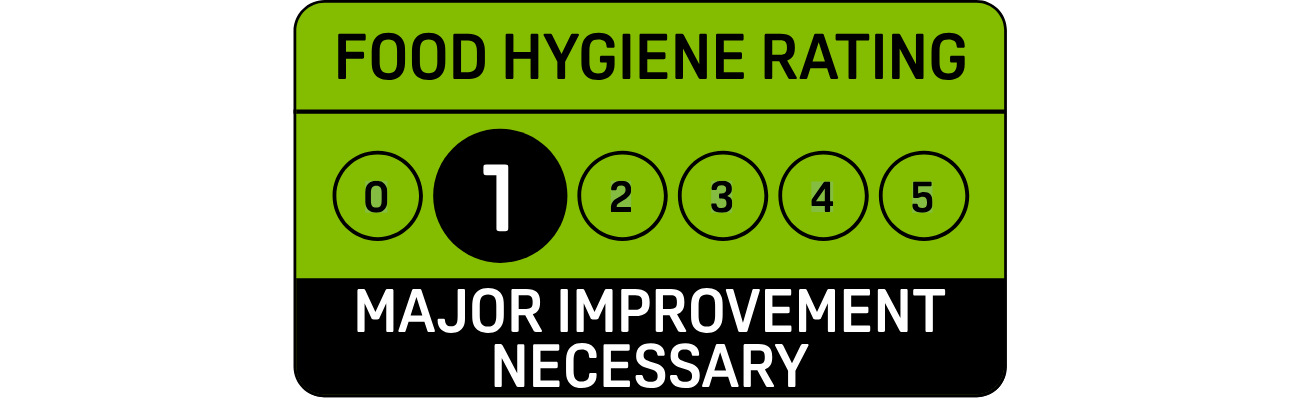
Rating 1 — major improvement is necessary
Significant weaknesses were found. Major improvements are needed to bring food hygiene controls up to an acceptable standard.
Rating 0 — urgent improvement is required
Serious failings were identified and urgent improvement is required. Where an immediate risk to health exists, separate enforcement action may also be taken.
Registering and receiving a rating
Food businesses must register each establishment with the relevant Local Authority at least 28 days before starting to trade. Registration is free. The Local Authority will then include the business in its inspection programme and determine when an inspection is due based on risk and local priorities.
Following inspection, the business receives information about the findings, any required improvements and its rating where the scheme applies. Display requirements differ by nation: displaying the sticker is mandatory in Wales and Northern Ireland, while display remains voluntary in England.
Working towards a rating of five
Strong inspection outcomes depend on effective everyday controls. Key priorities include:
- Maintain safe food storage and temperature controls.
- Train, supervise and support staff appropriately.
- Keep the premises, equipment and facilities clean and well maintained.
- Use hygienic preparation practices and prevent cross-contamination.
- Keep food-safety procedures and monitoring records current.
For more detailed guidance, visit the Food Standards Agency’s Food Hygiene Rating Scheme guidance.