Important
This article provides general food-safety information for UK households. Always follow the storage, preparation and date instructions on the individual product. Anyone with particular medical, dietary or infant-feeding requirements should include those needs in their household plan and follow relevant professional advice.
Following a request for expert comment for The Independent, we were asked what households should avoid stockpiling as part of the UK Government's Be Ready campaign. The short answer is that emergency preparedness should be planned, proportionate and based on food a household will genuinely use.
The Government's Be Ready checklist recommends keeping three days' worth of non-perishable food and bottled water. It advises households to check what they already have, build supplies gradually during normal shopping and review them every six months. This is very different from panic buying or keeping large quantities that may expire before they can be used.
What food is suitable for an emergency supply?
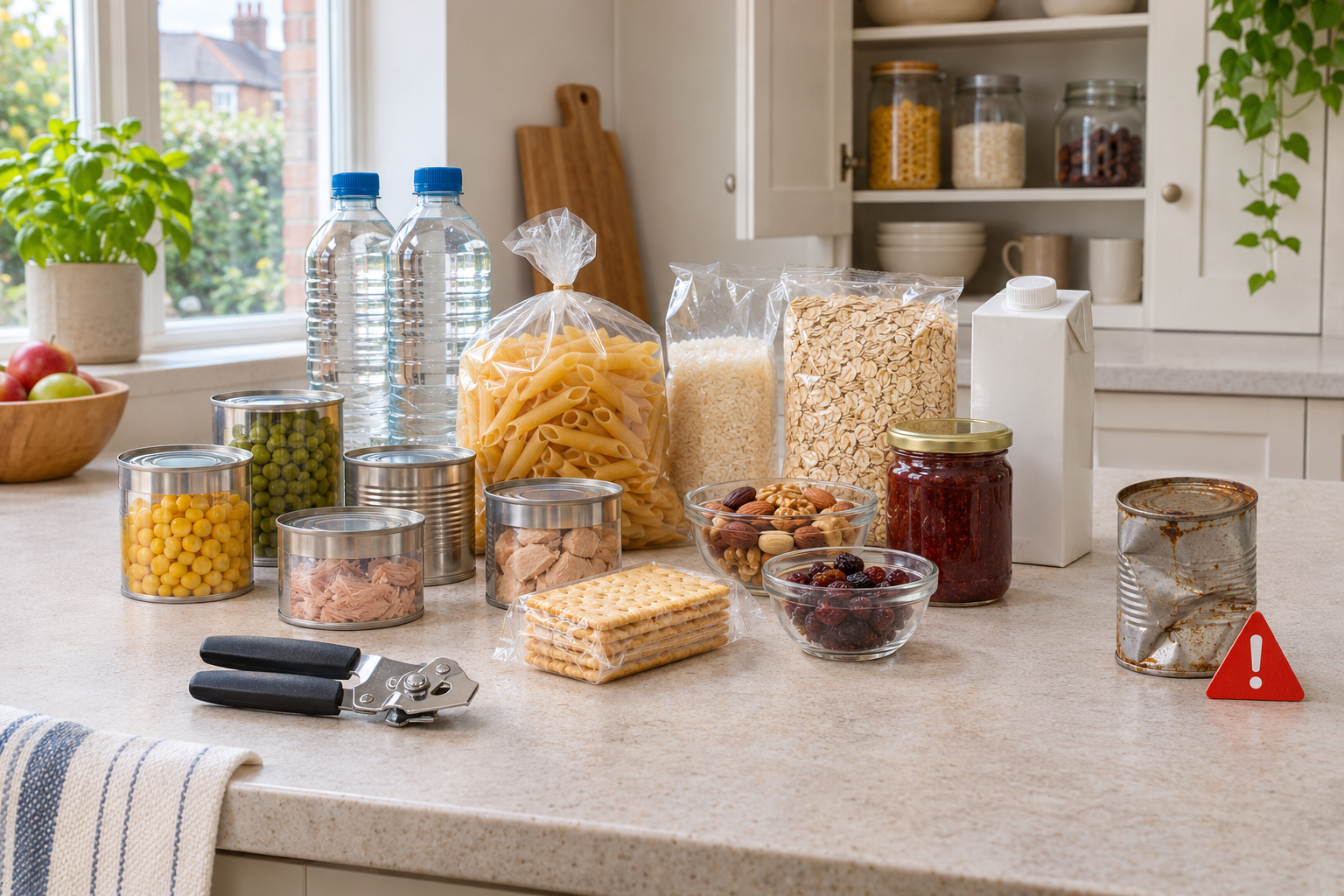
Choose shelf-stable products your household already enjoys and can use in its normal meals. Suitable options may include:
- Ready-to-eat tinned meat, fish, beans, pulses, fruit and vegetables.
- Dried fruit, nuts, crackers, cereal bars and other long-life snacks.
- Dried pasta, rice, noodles, couscous, oats and lentils where cooking is available.
- Unopened UHT milk, long-life juice and other drinks labelled for cupboard storage.
- Nut butters, spreads and shelf-stable jars or pouches.
- Some food that can be eaten safely without heating if gas or electricity is unavailable.
Include a manual tin opener where it may be needed. Account for allergies, intolerances, cultural or religious requirements, medication-related dietary needs, baby food and pet food. The Be Ready guidance recommends three litres of drinking water per person per day for three days, with additional water needed for cooking, washing, pets or medical needs.
What should you avoid stockpiling?
Avoid buying more perishable food than the household can use safely. Fresh meat and fish, chilled ready meals, bagged salads, dairy products and fruit or vegetables that deteriorate quickly are useful in an ordinary weekly shop, but they are poor choices for a long-term emergency supply.
Perishable food has a short shelf life and depends on reliable refrigeration. Buying too much increases waste and can create a food-safety risk if a power cut prevents it from being kept at the correct temperature. Frozen food can help extend the life of an ordinary food shop, but it should not be the whole emergency plan because the freezer itself relies on electricity.
It is also sensible to avoid excessive quantities, unfamiliar foods that nobody is likely to eat and products that require more water or energy to prepare than may be available.
Use-by and best-before dates are not the same
Understanding date labels helps households keep food safe while avoiding unnecessary waste.
- A use-by date is about safety. Food may be eaten up to and on that date if it has been stored as instructed, but it should not be eaten after it. Harmful bacteria cannot reliably be detected by looking at or smelling the food.
- A best-before date is about quality. Correctly stored food may remain safe after this date, although its flavour, texture or appearance may no longer be at its best.
The Food Standards Agency provides more detail in its guidance on best-before and use-by dates. Terms such as “display until” and “sell by” are normally stock-control information for retailers rather than safety dates for consumers.
Rotate cupboard supplies rather than allowing them to become a forgotten reserve. Put newer products behind older ones, use the oldest suitable item first and replace it during a future normal shop.
What does ambient storage mean?
Ambient food is food designed to remain stable without refrigeration while unopened. In a home, that generally means a clean, dry cupboard or larder away from direct sunlight and sources of heat such as an oven, radiator or boiler. It does not mean that every food can be kept at any room temperature indefinitely.
The product label is the authority. Follow any stated temperature range and instructions such as “store in a cool, dry place”, “refrigerate after opening” or “use within three days of opening”. A product that can be kept in a cupboard while sealed may need refrigeration as soon as its packaging is opened.
How to store emergency food safely
- Keep products in their original packaging so labels and preparation instructions remain available.
- Choose a cool, dry and dark location away from heat, moisture and direct sunlight.
- Keep food separate from household chemicals and protect it from pests and physical damage.
- Check packaging, dates and household requirements at least every six months.
- Use older products first and replace them gradually through routine shopping.
- Follow all instructions for storage after opening.
Check cans and jars before use
Tinned food is useful because many products are safe to eat without heating, but the container must remain sound. Do not eat food from a can that is bulging, leaking, heavily rusted or deeply dented. Avoid jars with cracked glass, loose or raised lids, broken seals or signs of leakage. If you are unsure whether a product has been packaged or stored correctly, do not taste it.
The Food Standards Agency's botulism guidance specifically advises against eating food from bulging, heavily rusted or deeply dented cans.
Plan for a power cut
Keep a portion of the household supply in products that need neither refrigeration nor cooking. During a power cut, keep fridge and freezer doors closed as much as possible and follow current food-safety advice before deciding whether chilled or frozen products remain safe. The FSA publishes specific guidance on food safety during a power cut.
Prepared, not overstocked
A useful emergency food supply is modest, varied and regularly used. Start with what is already in the cupboard, add any gaps gradually, and choose food that fits the household's needs. Good preparation reduces waste, avoids unnecessary pressure on shops and makes it more likely that the food will be useful if everyday services are temporarily disrupted.